 |
G.A.S.L.I.G.H.T.
Glorious Adventures in Science
Loosely Involving Generally Historical Times |
 |
Rules for Adventures in the Victorian Era
by Christopher Palmer and John R. "Buck" Surdu
Page Contents |

|
|
About G.A.S.L.I.G.H.T.
 |
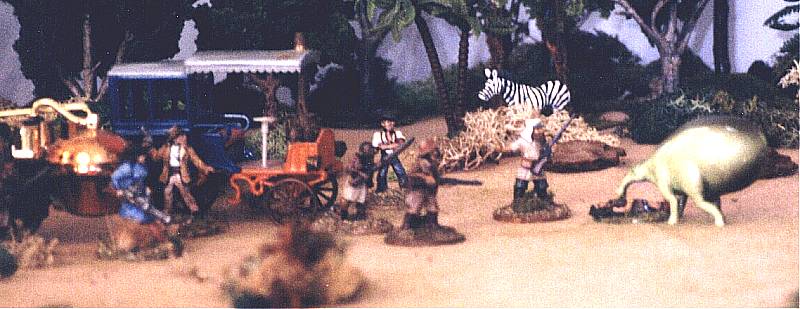
Gaslight is a set of rules for fighting skirmishes in the Victorian
era. Bands of stout-hearted Extras are led by Main Characters -- from
the streets of London to the hills of South Africa and from the
glorious charges of the Crimea to the maelstrom of the American Civil War.
These rules were written with the works of Victorian science fiction
authors in mind, such as Wells, Verne, and Haggard. In addition to
standard colonial era actions, special rules are included for adding
various science fiction elements to the plot, including, but not limited
to, steam conveyances, fabulous inventions, glorious weapons, and
strange creatures from the depths of the jungle or the core of the Earth. |
In Gaslight, units generally consist of ten figures led by one or more
Main Characters. A player normally controls one or two units. A player may
also control one or two vehicles and their crews. Gaslight includes rules for
creating Main Characters with somewhat more detail than the Extras. The games
then are a combination of unit actions and individual heroism in the tradition
of adventure novels and swashbukling films. |
 |
 |
Gaslight is based on the popular Thunder and Plunder and
Blood and Swash rules.
Command and control is accomplished through a card-based turn system.
Movement is based on moving individual figures. Firing is done by figure as well,
but the firing procedure is very quick. Morale is accomplished through a unique,
stateless system that treats loss of cohesion in an novel way.
Detailed charts are provided for creating personal weapons, heavy weapons, vehicles,
and fantastic creatures. The concept used in Gaslight is that of imperfect
mechanization -- machines don't always work as intended. This often adds a bit
of excitement and humor to the games.
The rules include a beautifully laid out booklet and a single chart card, which
contains everything needed to play a Gaslight game.
|
The authors of Gaslight made the specific design choice not to
build our own world for these rules. Instead the rules allow for the generation
of vehicles, weapons, and creatures that allow groups of players to tailor the
rules to their perception of Victorian science fiction. As a result, we
are confident you will find these rules flexible and fun.
 |
 |
G.A.S.L.I.G.H.T. at Cold Wars 2001
G.A.S.L.I.G.H.T. was first released at Cold Wars 2001, in Lancaster, Pennsylvania.
We ran four games to help promote the rules. A major success story for us was one guy who
bought the rules on Friday morning and then ran a game using the rules Friday evening. He
was able to easily create the attributes for the game that fit the various scratch-built
robots and vehicles he had built for his group's games. This
is a testament to the simplicity and flexibility of the rules. Try them and find out how
easily they can be adapted to your own vision of Victorian science fiction.
Click on thumbnails to view the full-sized image.
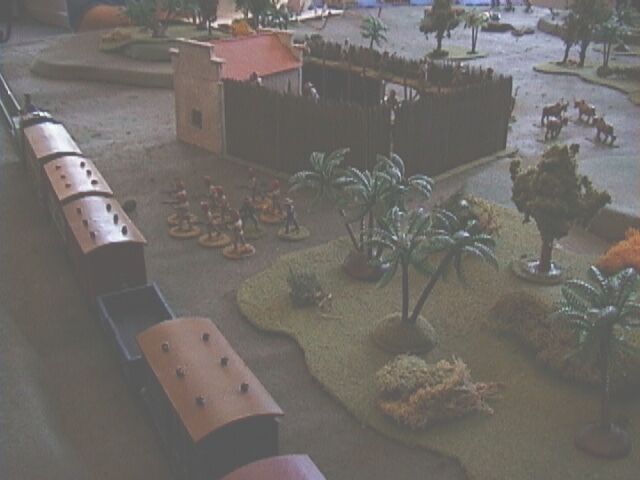
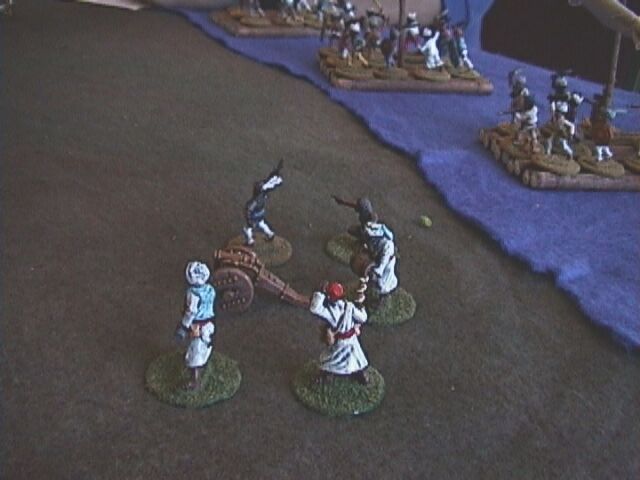
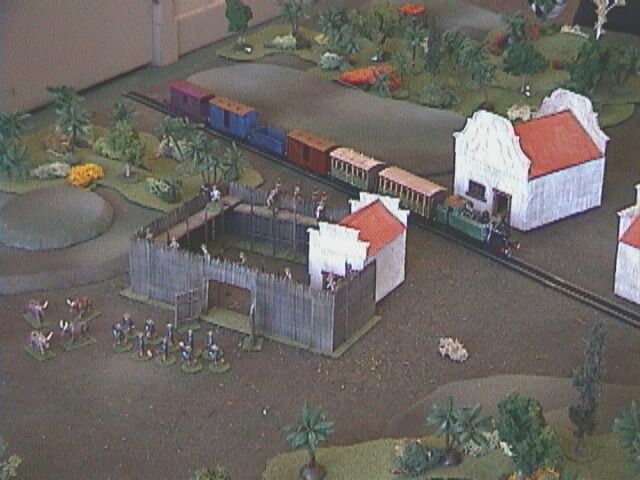
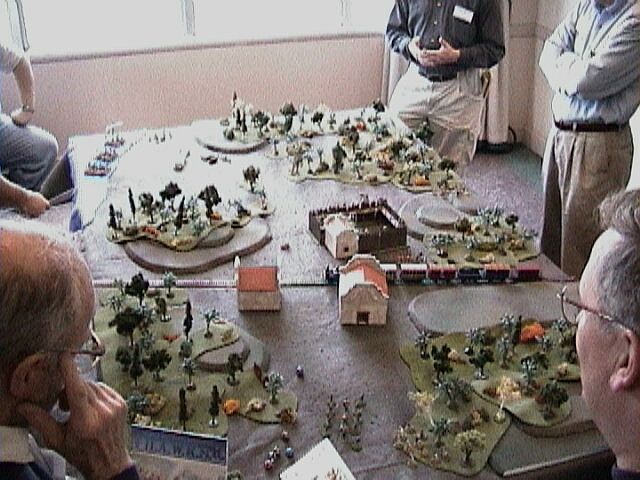
Moros by G.A.S.L.I.G.H.T.
A Moro game with none of the Victorian science fiction elements. |
 |
 |
 |
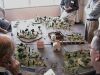 |
| The Riviersco train before a scratch-built fort. |
Moro cannon crew (foreground) and more Moros coming ashore (background). |
Another view of the fort and train. |
Panaramic view of the whole table. |
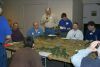
Darkest Africa by G.A.S.L.I.G.H.T.
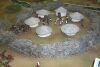
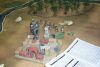
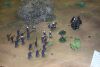
A multi-sided free-for-all involving British, Americans, Belgians, Germans, Zanzibaris, Boers, and
natives all rushing toward a newly discovered diamond mind in the Valley of Dinosaurs. |
 |
 |
 |
 |
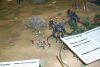 |
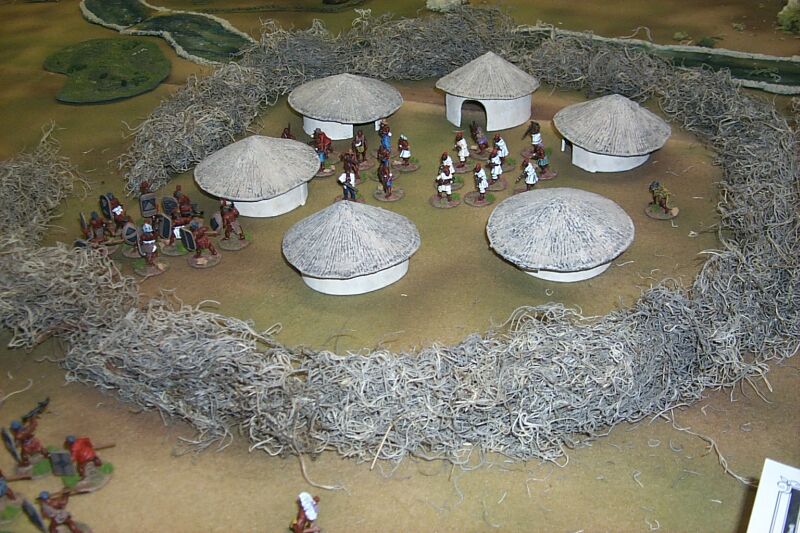
| Natives defending their village against the Zanzibaris. |
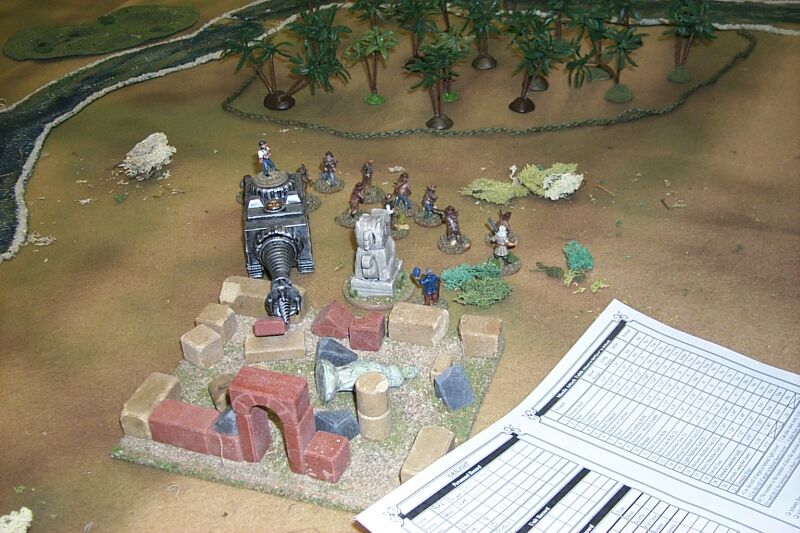
Boers and their steam-powered boring machine in the temple ruins. |
The Belgians advance behind their steam war cart, armed with an electronic harpoon gun. |
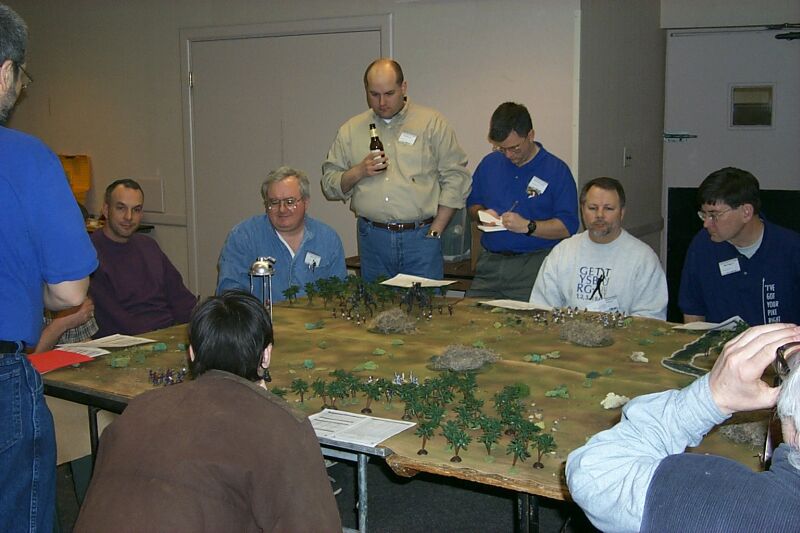
A view of the table a few minutes before the game began. |
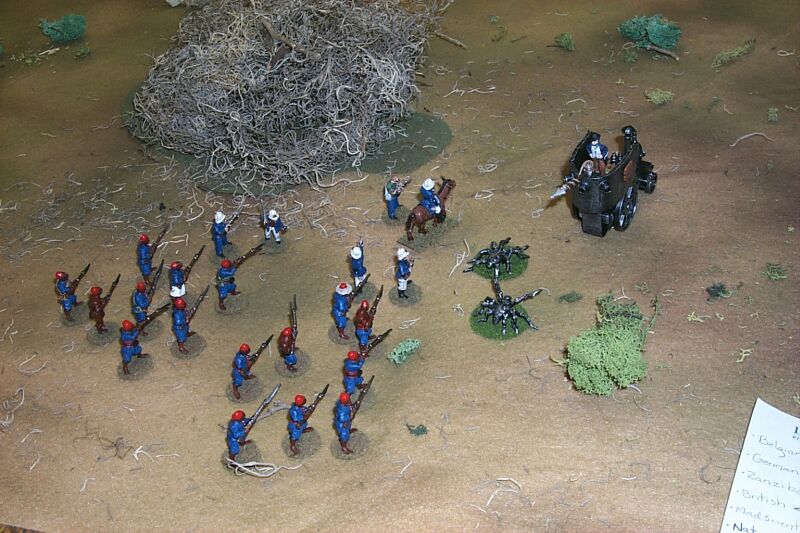
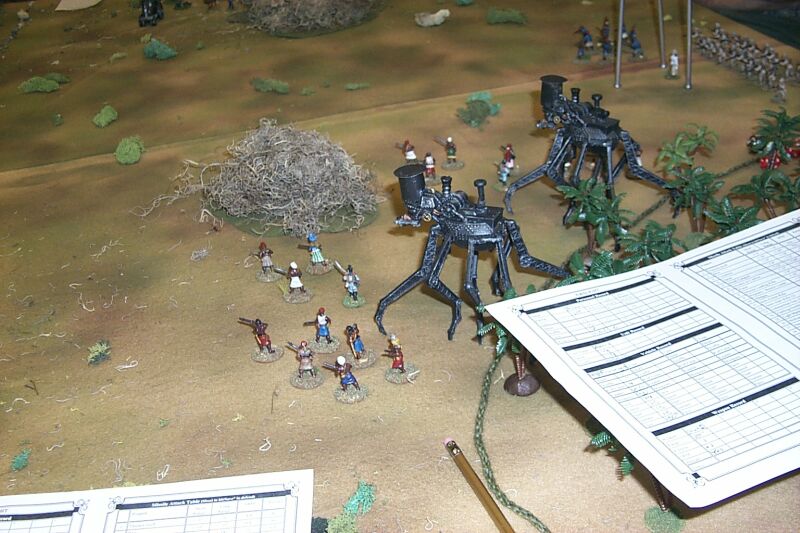
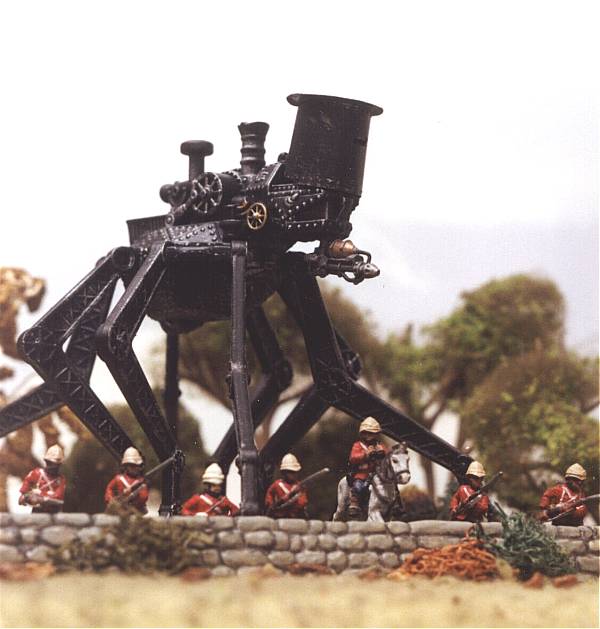
Germans advancing with their mechanical spiders. British can be seen advancing with
captured Martian tripods in the background. |
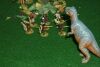
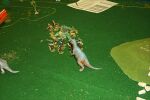
The Island of Dr. Dean by G.A.S.L.I.G.H.T.
A small-unit action showing off how G.A.S.L.I.G.H.T. works for very small, ultra skirmish
actions. |
 |
 |
|
|
|
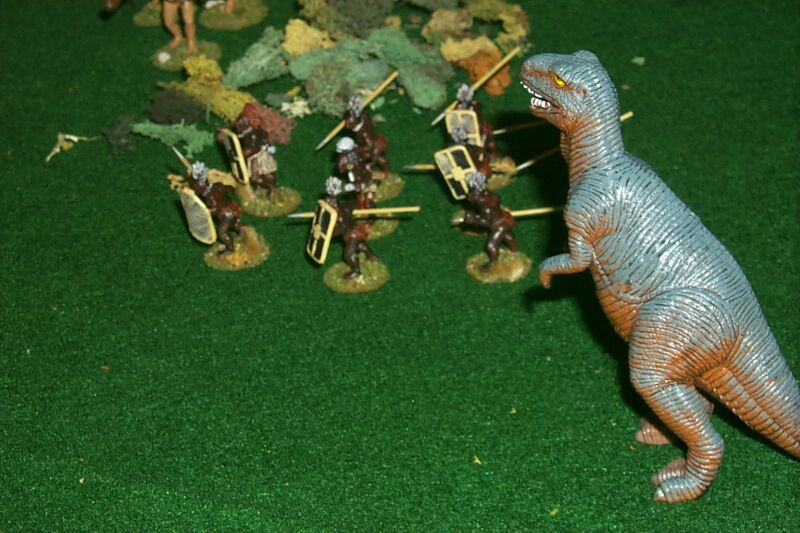
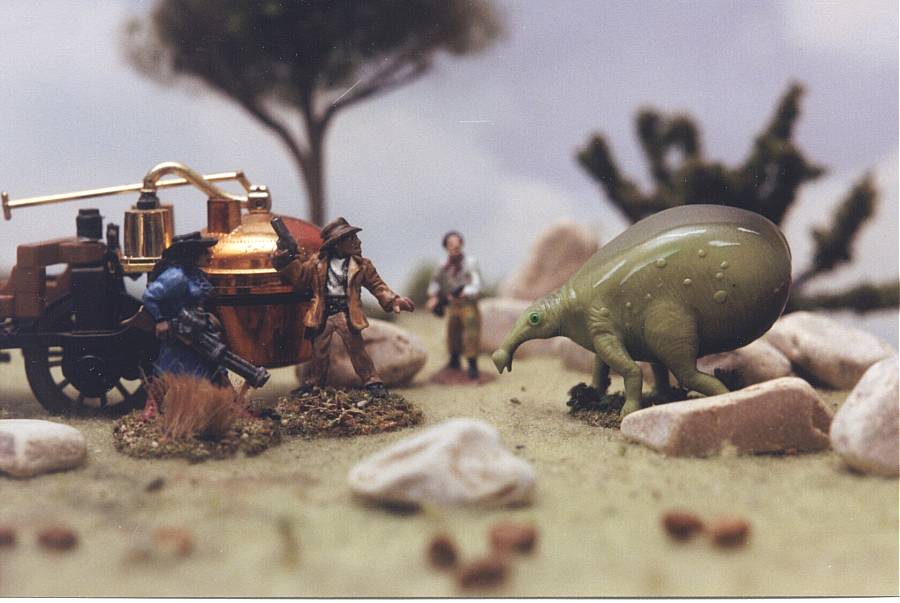
| A closeup of a dinosaur on the Island of the Evil Dr. Dean. |
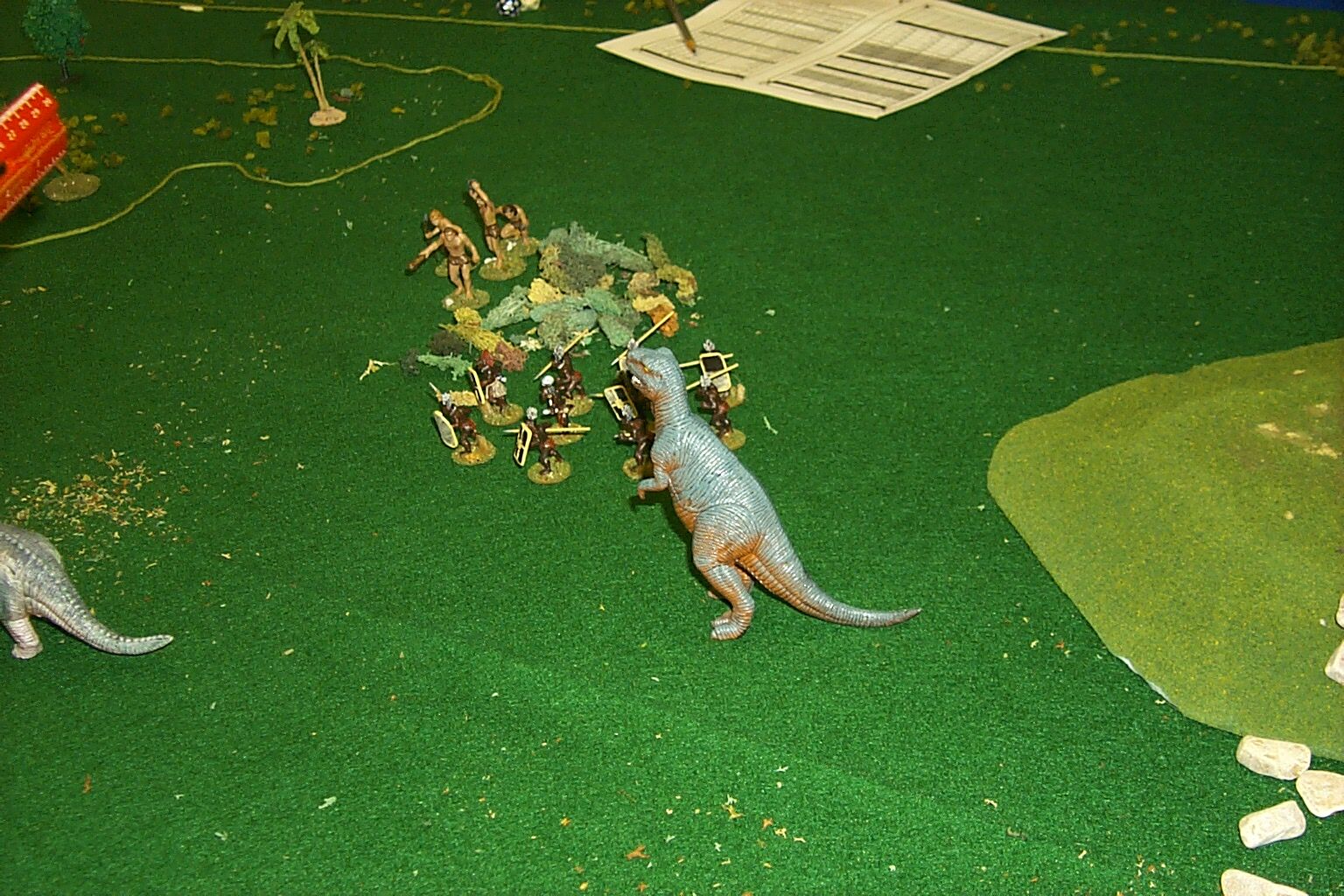
A more distant shot of the battle royal between natives and Dr. Dean's pets. |
|
|
|
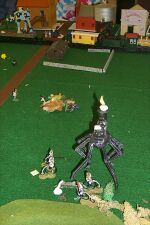
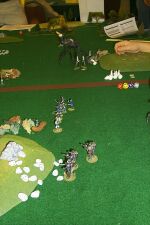
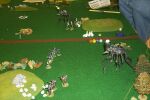
Civil War by G.A.S.L.I.G.H.T.
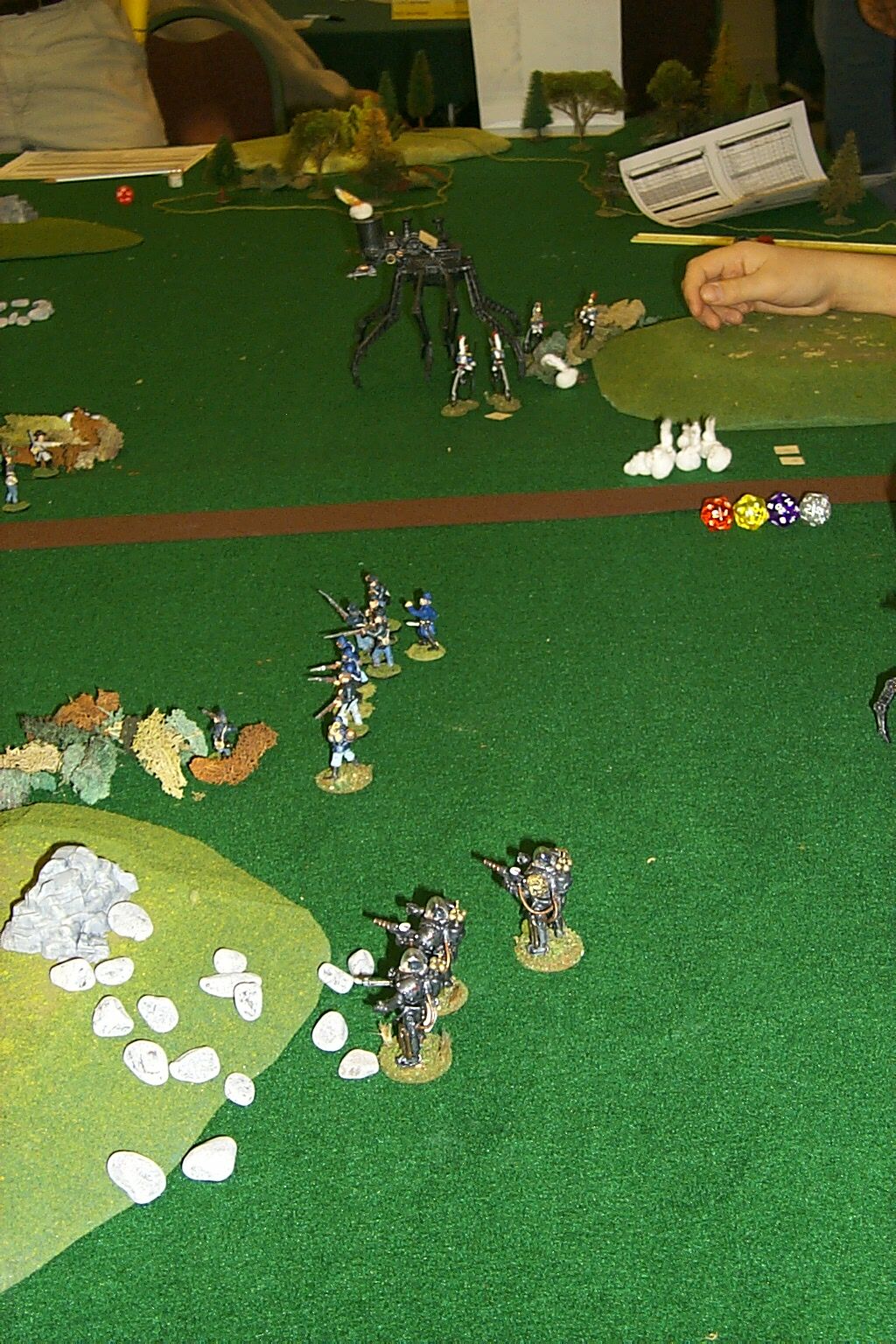
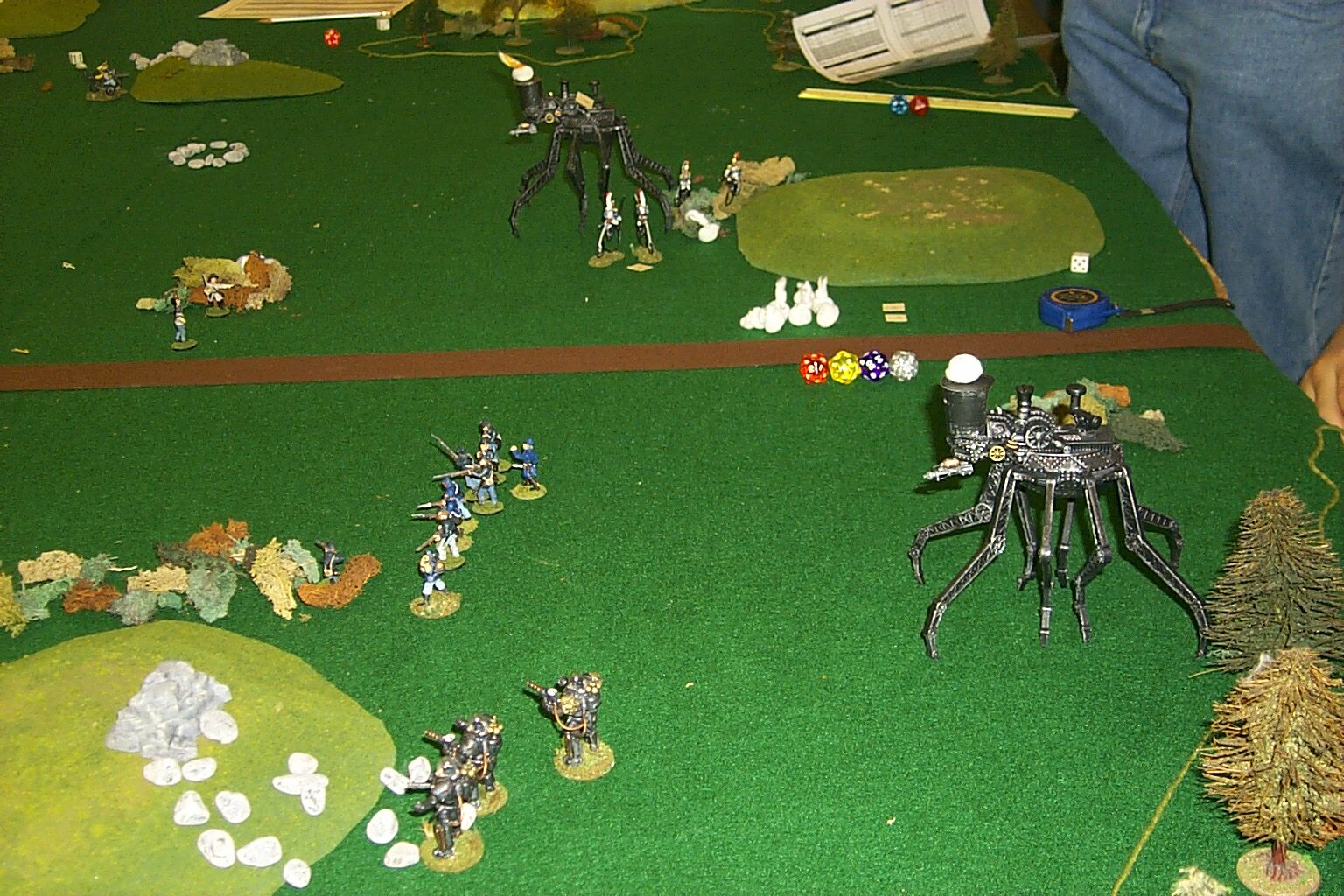
Union and Confederate soldiers battle it out among strange inventions during the
American Civil War. |
 |
 |
 |
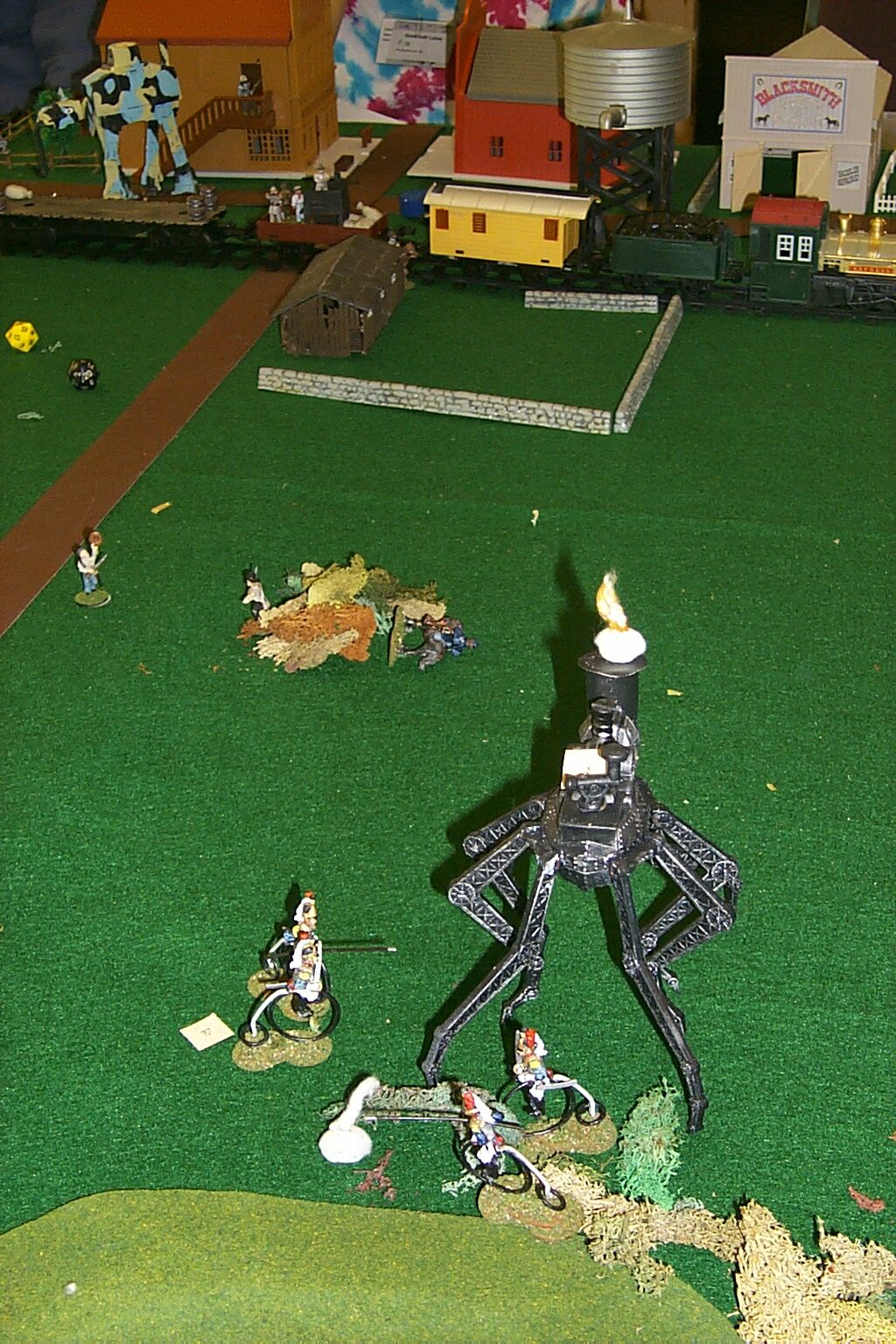
| A Union spider assaulted by the Charleston bicycle lancers. |
A long shot of the battles. Note the Eureka Miniatures Hardlove Impervious
suits in the foreground. |
A landscape view of the previous picture. |
|
|
Ordering G.A.S.L.I.G.H.T.
Gaslight rules are published by LMW Works and are available at P.O. Box 844, Amherst, NY 14226.
The cost of the rules is $15 U.S. The ISBN number of G.A.S.L.I.G.H.T. is 1-889584-06-1, and they
should be available through Amazon.com soon.
G.A.S.L.I.G.H.T. Record Sheet Generator
Noting that it can be a bit time consuming to create a bunch of record sheets for a many-player
game, Buck created a simple Java application to help with this process. The program is a bit crude,
but it does a pretty good job of generating vehicles, scientific weapons, and main characters.
The creation of units is very easy. You can create main characters for units using this software
as well.
Since this application uses a technology called Java Web Start, every time you run the program, if
you are connected to the Internet, your browser (or the Java Web Start Application Manager) will
check this site to see if there is a software upgrade. Because this is not meant to be a
commercial application, Buck did not spend any time writing documentation. Some rudimentary
instructions for running the program are listed below. You should be able to
fiddle with the application and see how it works. Installation is a three step process, unless you
already have a Java 1.3+ runtime installed.
Step 1:
You need to download and install Java jdk1.3.
Step 2:
If you have not already downloaded Java
Web Start technology, you will need to do so now, before using the demos.
Step 3:
Launch the program.
Use the pull downs to select the kinds of Main Characters, Vehicles, and Weapons
you want to generate. You can select the kind of weapon the unattached Main Characters
are carrying or let the computer generate some. When you press the Generate button,
the record sheet shows up in the bottom window.
If you don't like the first round of generation, click the Clear button and then
press Generate again.
When it is done generating stuff, you can cut and paste it into Word. You still
have to transfer it by hand to the record sheet, but that still saves LOTS of time.
G.A.S.L.I.G.H.T. yahoogroups List
If you use your browser to visit http://www.yahoogroups.com
you will be able to join the G.A.S.L.I.G.H.T. discussion group. We don't anticipate
this group filling your Email box every day, but it will be a good place to post
questions about the rules, local modifications you have made, scenarios you have
run, etc. In addition, we hope to include notes on scratch-building Victorian
science fiction vehicles and devices. Finally, we may post some battle reports, and
we hope that you will post some of your adventures as well.
Last modified by John R. "Buck" Surdu
8 April 2001